Lessons on Emotions from Marina Abramović
T

he iconic Accademia Gallery in Venice, among many works of art from the past, presents a beautiful collection of sculptures by Antonio Canova from the 18th and 19th centuries. Among these sculptures, the works of a conceptual artist of Serbian origin are presented. Marina Abramović, at the age of 80, presented part of her life story and one of the solutions for treating emotional breakdowns.

The exhibition "Transforming energy" presents the artist's aspirations to establish her own energy balance after difficult emotional moments. Most of the exhibition was not allowed to be recorded, so this video presents the second part, also of great importance for understanding the whole.

At a time when everything is exposed to public view, Marina Abramović's new exhibition remains a personal experience because of this ban. Conceptual art requires the viewer to establish a personal emotional connection with the art.

The film from 1988. opens the exhibition doors
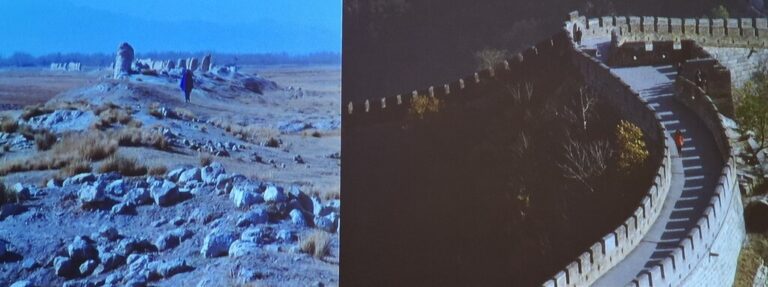
Marina Abramović i Ulay na Kineskom zidu

At the entrance to the exhibition space, a film plays, showcasing the final conceptual work with her partner, Ulay (Frank Uwe Laysiepen). They begin from opposite ends of the Great Wall of China, walking toward each other over several days. Marina Abramović is dressed in red, while Ulay wears blue.

In that period, China was still a communist country, and in 1988 there were no mobile phones, and communication was reduced to an absolute minimum. However, by the end of the journey, rumors reached Marina that led to the termination of this emotional relationship. As she herself explained, when they finally met on the Great Wall of China, it also meant the end of their relationship. 

Marina Abramović’s documentary films offer a deeper look into the events that made this work both historic and legendary, as she shares insights about the making of the broadcast film.

Three-sided screen for contemplation

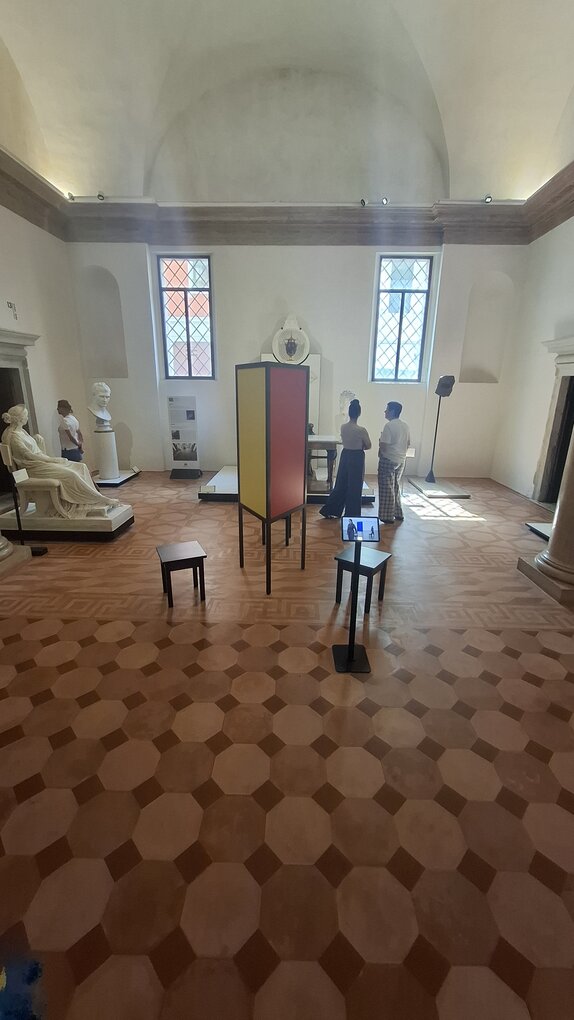
Red, blue, and yellow colors are offered for contemplation. Chairs are placed in front of these colored panels, and you can choose. Unlike the film, where only red and blue appear, yellow is clearly introduced here as a symbol of a third person or something third. The art objects that appear further explain the emotional moments involved in resolving this energetic life decline.

Trostrani paravan Marina Abramović
Three-sided screen Marina Abramović
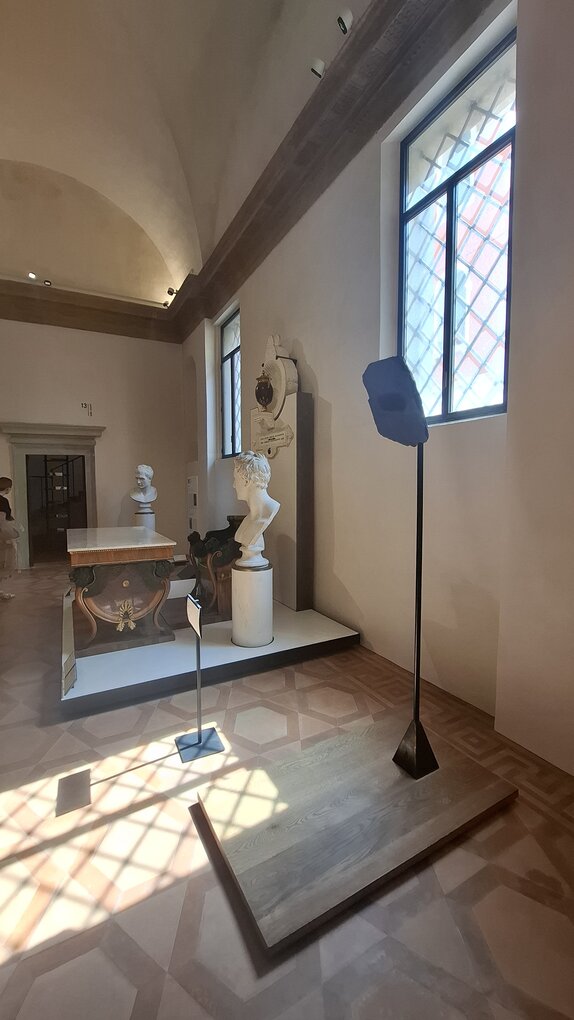
Ogledalo za odlazak Marina Abramović
Departure mirror by Marina Abramović
Marina Abramović presents items for leaving

Among Antonio Canova's perfect sculptures, an unsightly, gray, indistinct sculpture called Departure Mirror was placed.

The visitor's guide instructs: Look at yourself in this mirror!

But no one can see their image on this polished stone surface. It's a sign to leave. When you no longer see yourself in an emotional relationship, it's time to leave.

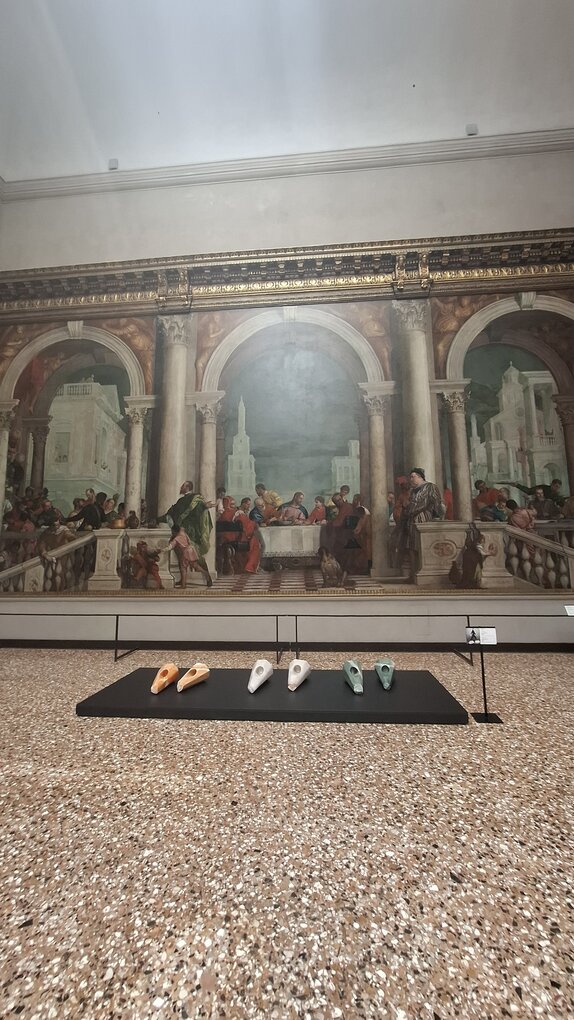
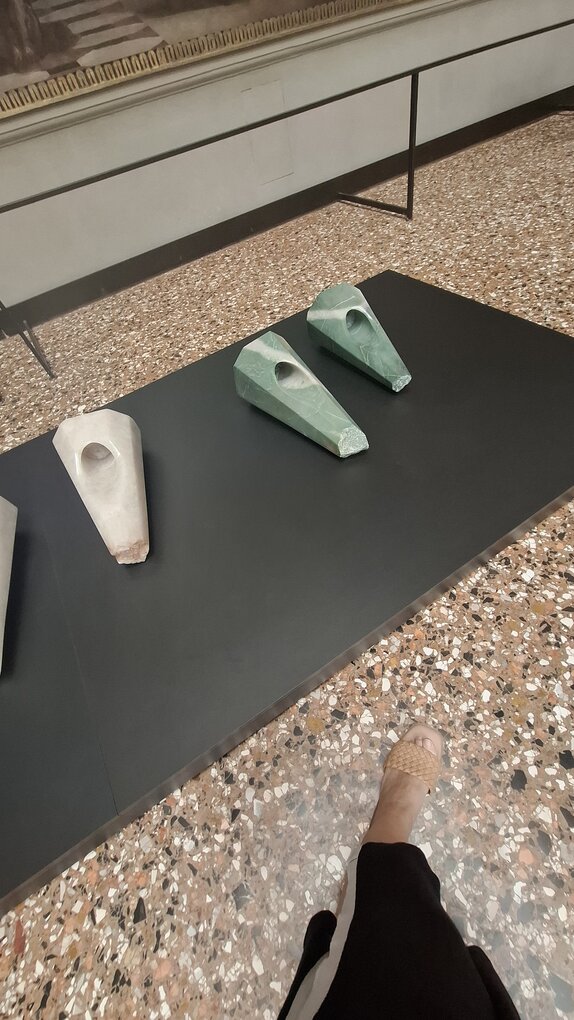
Similar to the previous message, leaving shoes won't get you very far, as they are made of marble.

Cipele za odlazak M. Abramović
Departure shoes M. Abramović
Cipele za odlazak Marina Abramović
Departure shoes Marina Abramović
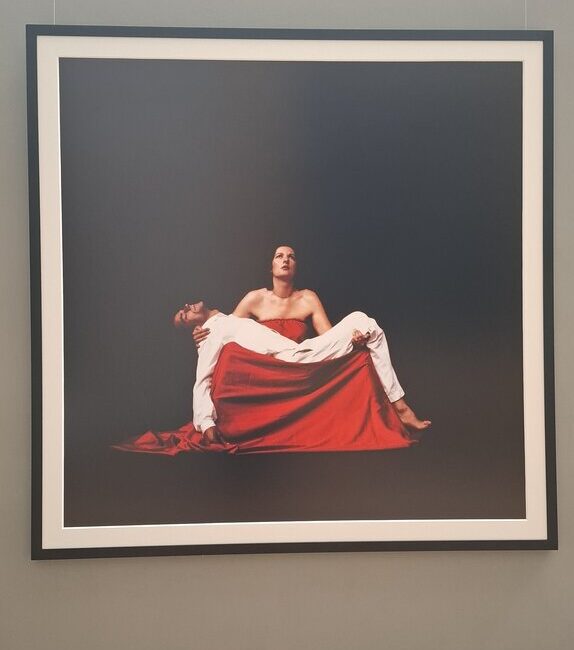
Pieta

A special spot in the exhibition was dedicated to Marina’s photography, showing her holding the body of her partner Ulay in a seated pose. Inspired by Michelangelo’s Pietà from St. Peter’s Basilica in Rome, the positioning and attire echo the iconic sculpture. Marina sits in a similar stance, dressed in an oversized, flowing gown, while Ulay, depicted as Christ, reflects the deep significance of his loss to her.

Marina Abramović Pieta
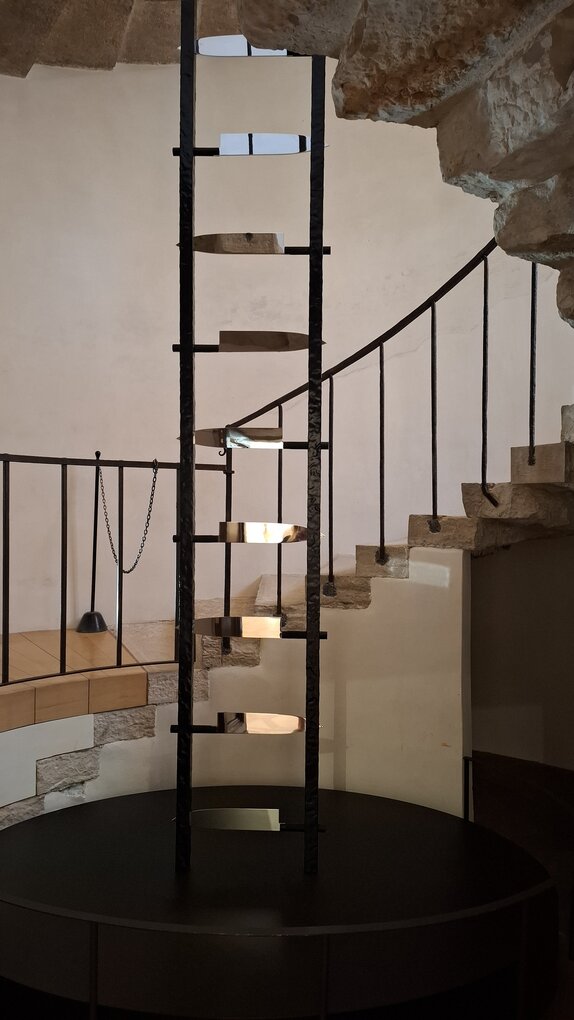
Merdevine Marina Abramović
Ladder Marina Abramović

Architect by education. I am researching the theoretical foundations of the construction of modern buildings in the historic city core. Protection of historical heritage through revitalization - new life for old buildings.

TOP