Kelnska Katedrala i Muzej

The city of Cologne combines contemporary architecture with heritage
T

ologne, Germany How did contemporary architecture highlight the visual character of heritage, but also show that it has something to offer in a city of architectural contrast?

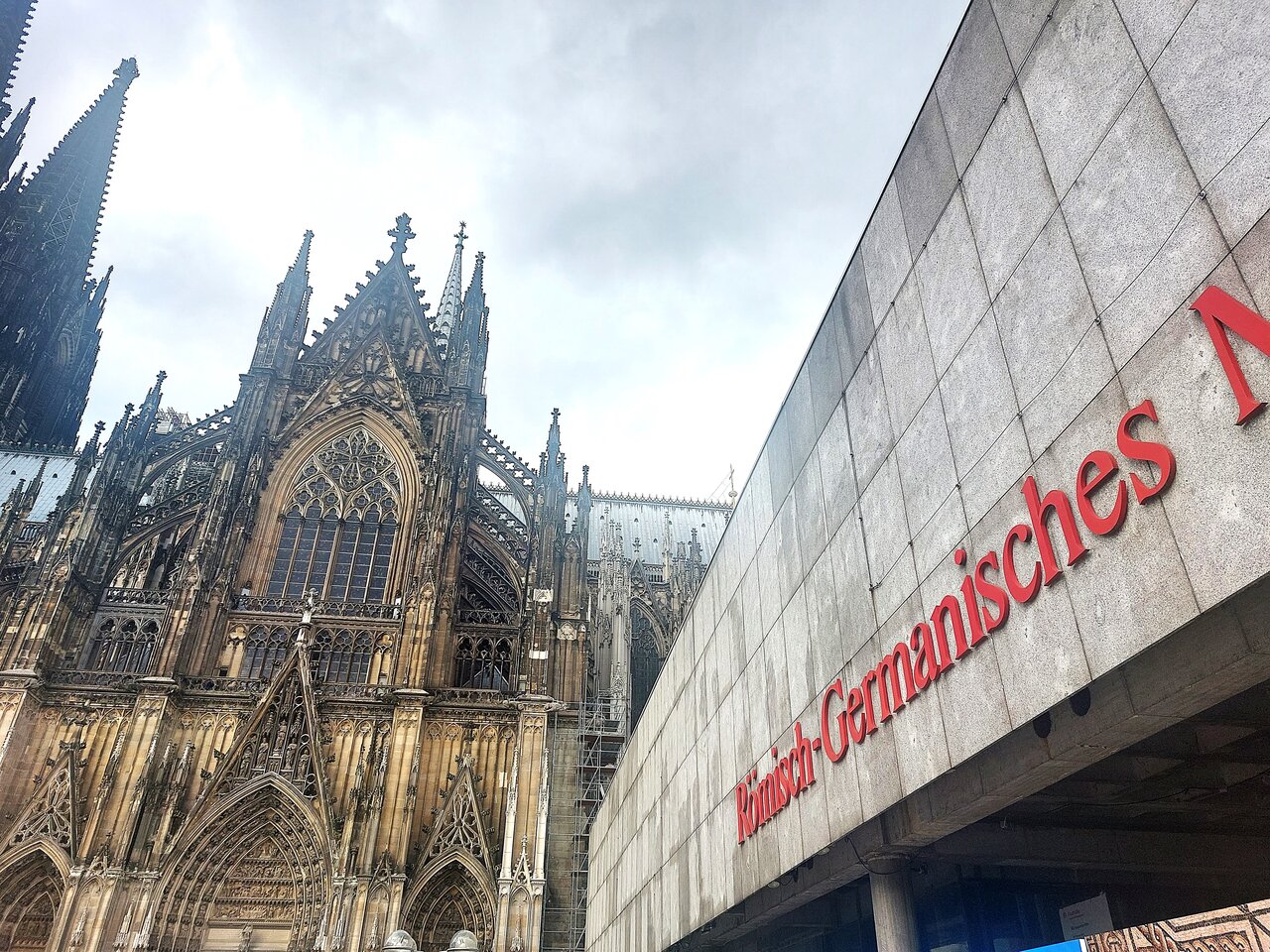
The Cologne Cathedral is the main motif of this city. Right next to it is the Ludwig Museum of Contemporary Art. These two buildings announce what awaits you in this city in terms of the dialog between old and new. Uncompromising contrasts between the concrete aesthetics of industrial halls and the ornate Gothic cathedral that is approached from the railway station with a specific aesthetic.

The city of Cologne combines contemporary architecture with heritage.

Architectural landmarks of Cologne

Remains of Gothic cathedrals

In a video that you can watch on YouTube, you can see a contemporary fusion of styles through a walk through the main architectural attractions of Cologne. These architectural interventions are signed by both the world's most famous architects and those completely unknown to the general public.

The Kolomba Museum is the work of the famous contemporary architect Pether Zumthor. The Gothic remains of the cathedral have been incorporated into a completely new building, and the inner promenade looks like an archaeological site with raised pedestrian walkways.

The next building, the Wallraf-Richartz Museum, partly preserved the ruins of the cathedral, and partly replaced them with minimalist annexes with contemporary stained-glass windows embedded in terrazzo. Another example of the treatment of Gothic ruins. Here, the original is preserved as an open space, in contrast to the closed, gallery approach of the Kolomba Museum.

Lindt Chocolate Museum

The Lindt Chocolate Museum on the banks of the Rhine is the most vivid example of the contrast between two incompatible architectures.

A small fortress on the riverbank was formed by a modern building covered with aluminium. The forms that have been applied belong to a truly recognizable style of the 20th century. Opposite them, the typical architecture of the past, form a living dialogue. 

Renzo Piano leaves his mark

Renzo Piano, one of the greatest architects today, left his mark opposite the diminutive Antoniterkirche, Evangelistic Church. It has also been partially restored using modern methods. All non-original parts are processed with simple construction methods, without false remains. The original remains must remain clearly visible and recognizable.

Across the street, as a contrast, there is a glass building by Renco Piano. Its balloon-shaped, light building houses a luxury goods store, under which there is a traffic hub. The curvilinear object gives a sense of modernity. It celebrates new constructive systems and materials with which such shapes can be made. The heavy grounded objects of the past are contrasted with the floating and transparent.

Religion is also modern - shopping. 

Reverse process

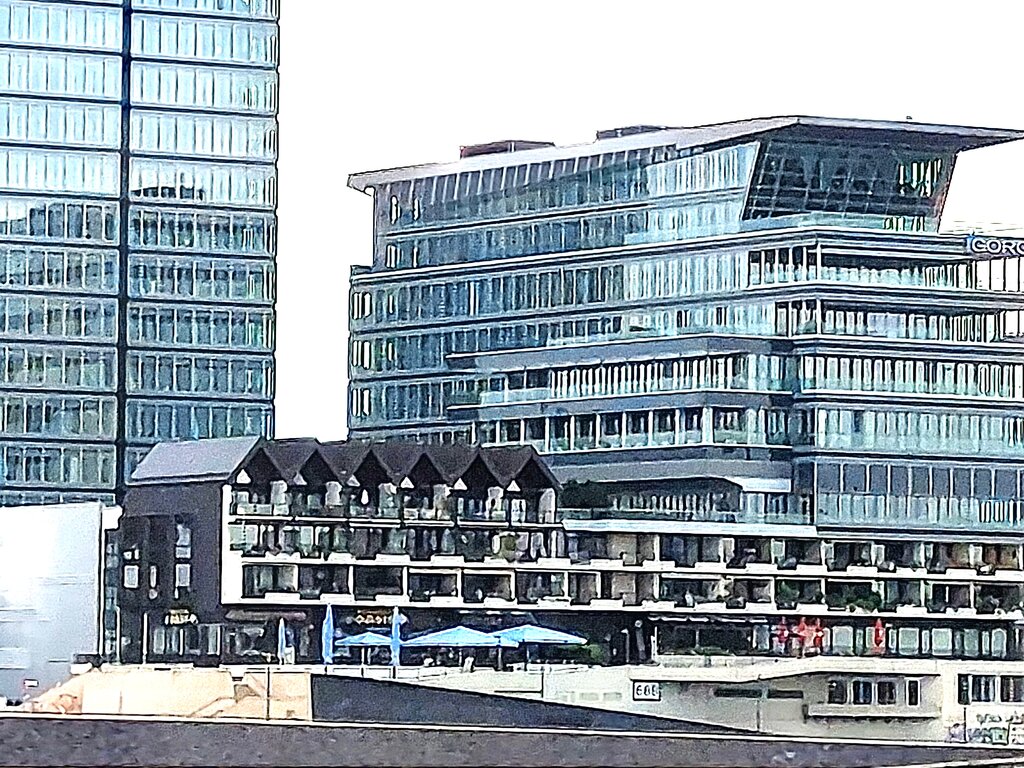
Keln, klasični krovovi na modernim objektima
Cologne, classic roofs on modern buildings
Keln klasični krovovi na modernim objektima
Cologne classic roofs on modern buildings

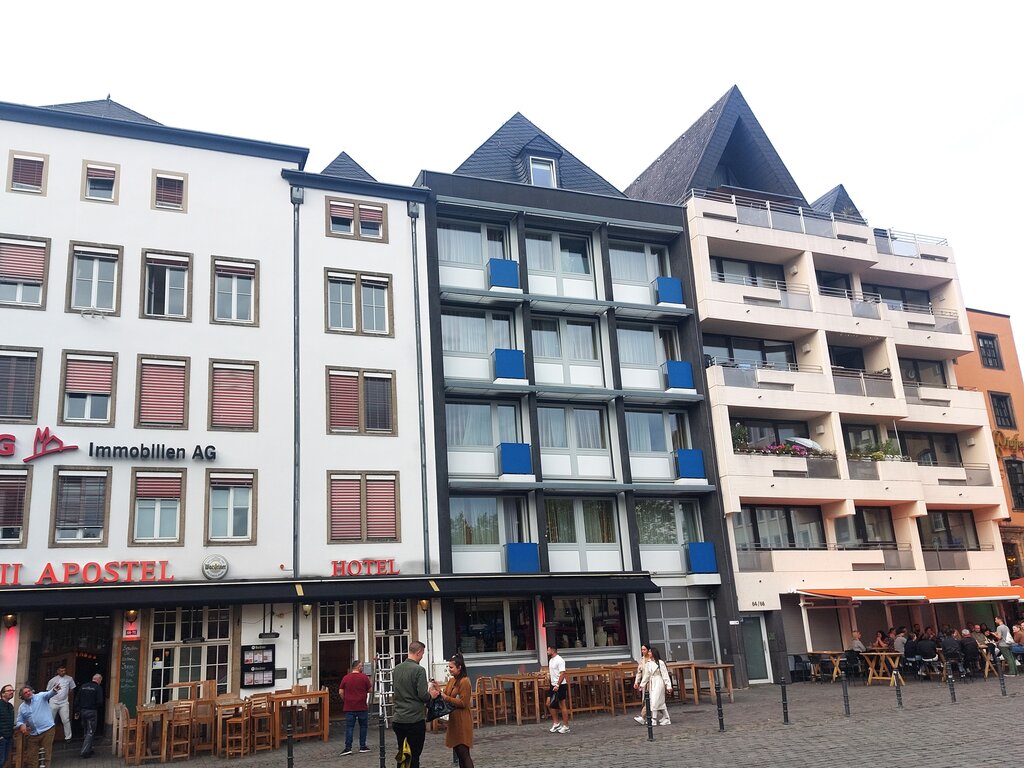
A very specific architectural intervention took place on modern, contemporary buildings. Traditional roofs are placed freely on modern buildings, where they have no place in terms of style. This reverse procedure aims to obtain the traditional contours of ancient squares. It is extremely rare to see it on new buildings - instead of old ones.

The Crane buildings are a recognizable architectural marker of Cologne

And finally, the Cran buildings, which have become an equal city marker along with the cathedral. All this can be seen in the video posted on You Tube. The complex included various examples of revitalization, upgrades and extreme contrasts. He truly represents the Cologne of the 21st century.

TOP