Kandinsky is a painter whose works made a complete revolution in painting up to that point. Einstein, Freud, the invention of X-rays, the splitting of atoms - this is the beginning of the 20th century. A wealth of innovations in the technical and industrial sphere and great discoveries in psychology and science mark it. Artists must define themselves and react to a new understanding of the world. The new artistic language formed by Kandinsky should support the knowledge that the invisible world is much bigger than the visible world. Art begins to look for a foothold in scientific discoveries, especially in connection with the discovery of the color spectrum.
Color becomes the main question mark - how and for what purpose should it be used?
The resulting images are full of emotional charge and aim to awaken the same in the viewer.
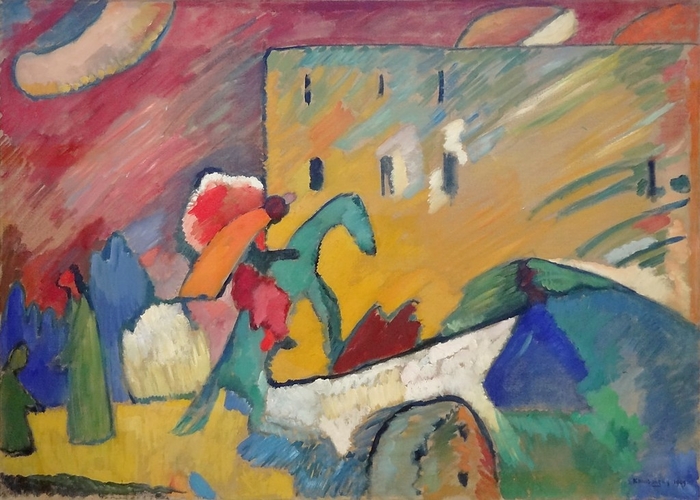
Kandinsky (Wassily Kandinsky), a native of Russia, already in his initial stages of German Expressionism, living in Munich, indicated his direction. The expressionist group The Blue Rider was named after Kandinsky's painting of the same name, one from 1903 and the other from 1909.
Comparing those two pictures clearly shows the development of the painter's idea. The group existed between 1911 and 1914, and in the first year of its existence, Kandinsky published a book explaining the principles of his future painting, "On the Spiritual in Art".
Music is an art devoted to itself, it is not a reproduction of the world around us, but a means of expressing the artist's soul.
Kandinsky
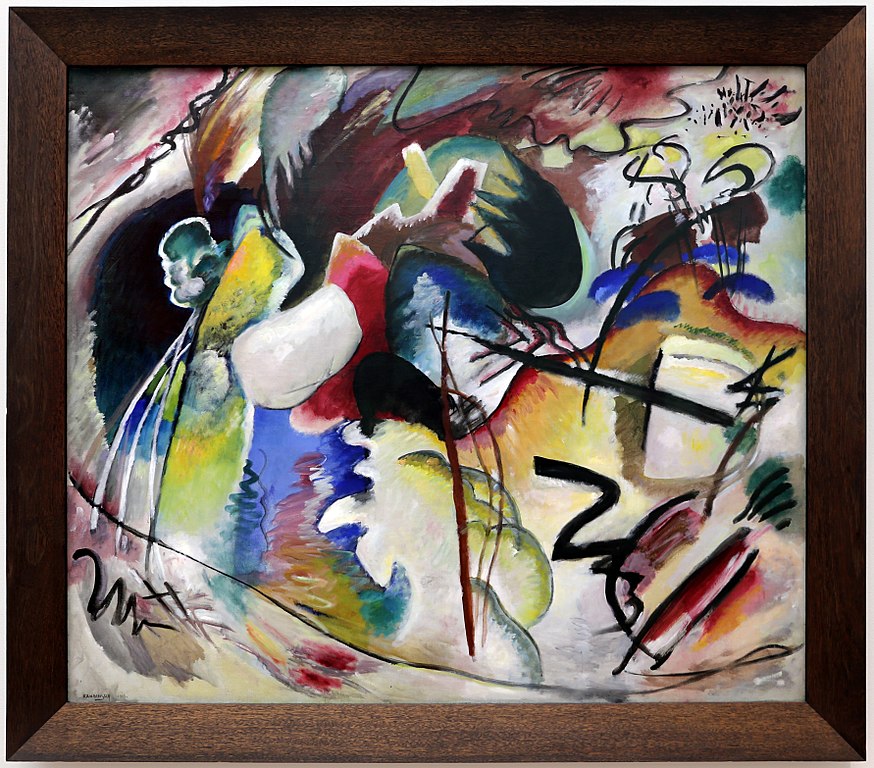
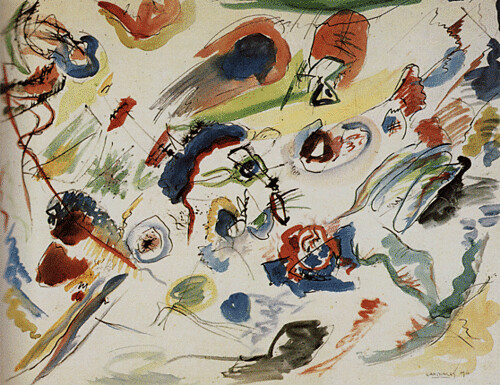
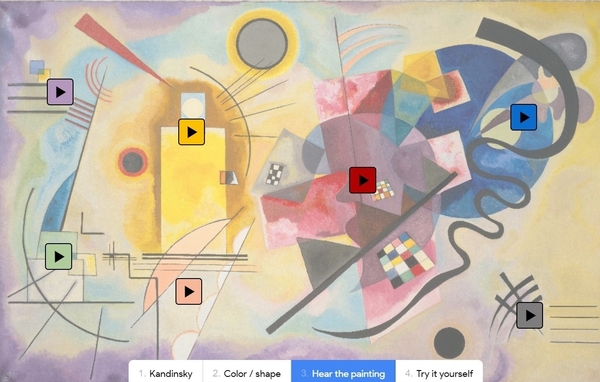
His concept brought radical changes to the world of art. Kandinsky compared his paintings to musical compositions, composed of smaller parts with their own rhythm.
He strove for his painting to be a performance that could stir feelings.
Working with colors for Kandinsky was like playing the piano
The color represented the keyboard, and the artist is the hand that plays that piano. The theory continues to develop each color gets its instrument , that is, each sound color gets its artistic color.
Black represents complete silence, a pause; light red is the color representing the tone of the trumpet, cold red is the sound of the sad middle note, and orange is the sound of an old violin. The greater complexity of the image acquires the importance of a symphony.
Collaboration with composers
He believed that his works could be performed and represent musical compositions. The composer Shoenberg and his contemporaries experimented with the theme of his paintings.
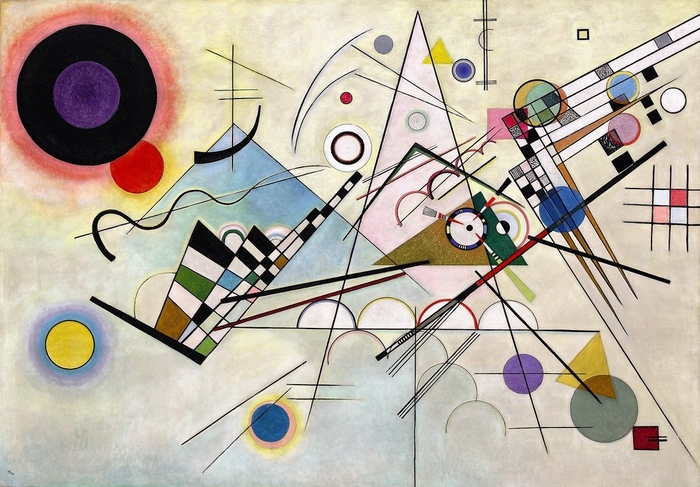
Composition 8 is the clearest representation of a musical symphony. The elements of the picture create a sense of music because they do not represent the known, visible world. With their combination of shapes and arrangement, the use of a certain color arouses interest in the viewer.
Further indulgence in the work of art leads to emotional reactions caused by the pure color and dynamics of the elements.
The National Museum in Belgrade and the Kandinsky
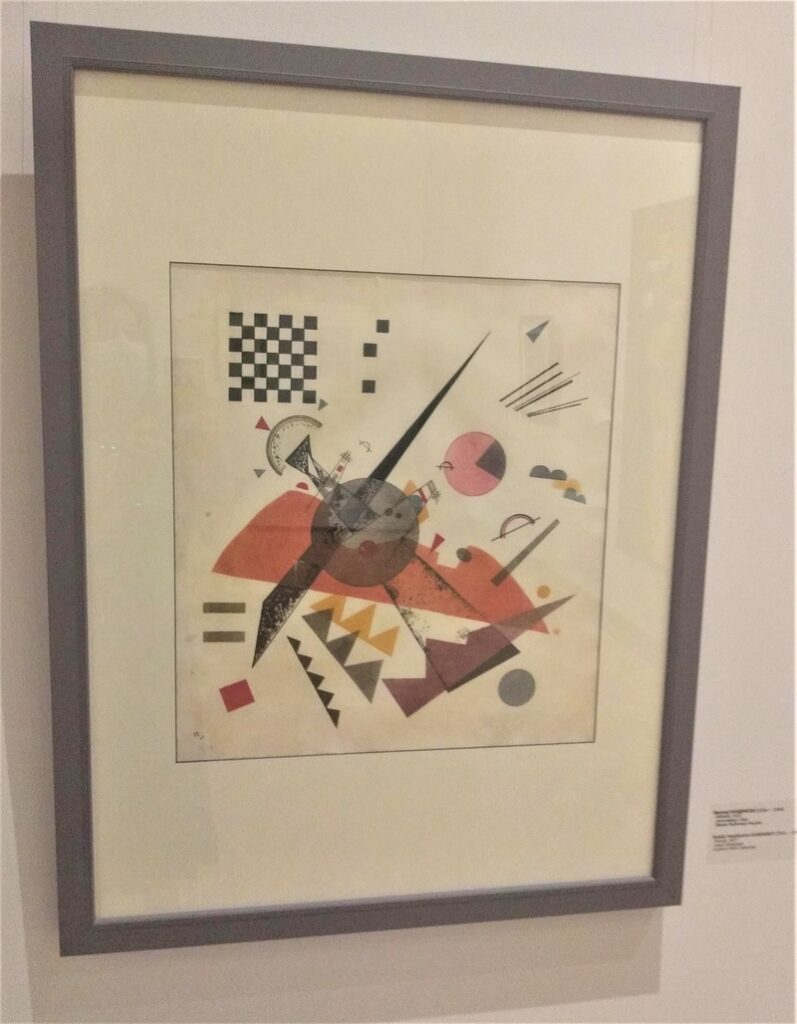
Kandinski , Oranž , Narodni muzej Srbije , Beograd
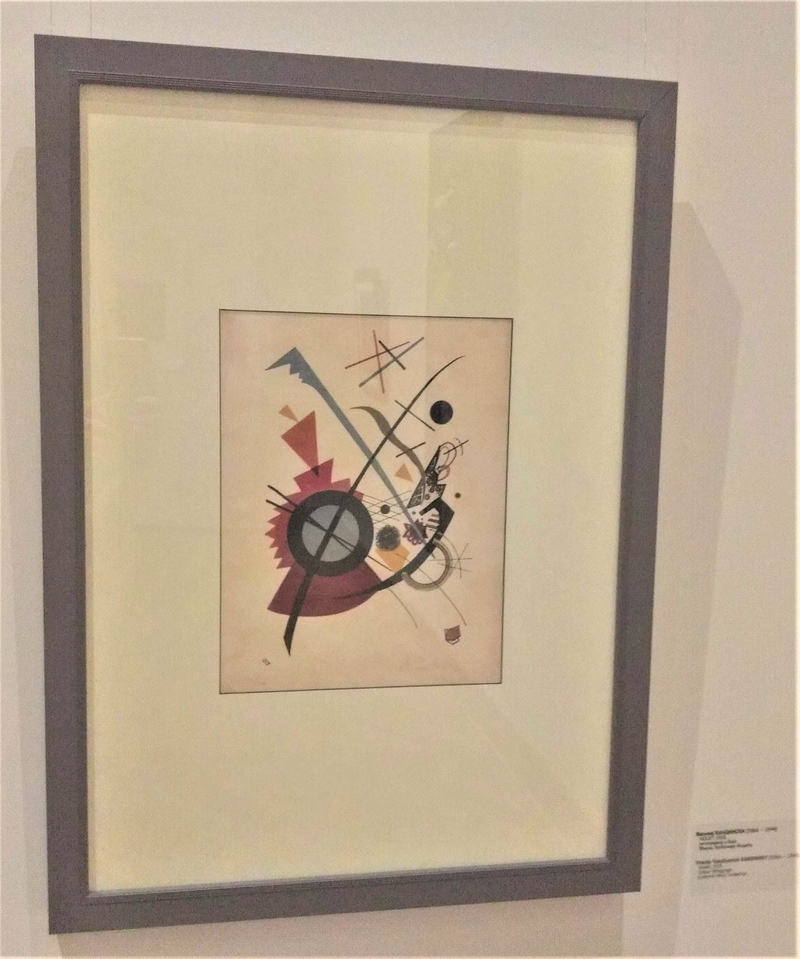
Kandinski , Violet , Narodni muzej Srbije , Beograd
The National Museum of Serbia in Belgrade keeps two compositions by Kandinsky - the compositions Violet and Orange from 1923.
These two pieces of the Russian avant-garde out of a total of eleven are the legacy of Ljubomir Micić, the founder of the Zenit magazine and a special avant-garde movement.
Zenith Magazine
Zenith was published in 43 issues with over 100 articles published by the most famous Yugoslav artists and writers. Miloš Crnjanski, Rastko Petrović, Dušan Matić, Jovan Bijelić, Stanislav Vinaver, Vilko Gecan, Josip Klek.
Contributions from foreign authors were published by Vladimir Mayakovsky, Sergei Yesenin, Alexander Blok, Boris Pasternak, Wassily Kandinsky, El Lisici, Maljevic, Walter Gropius, Georg Gross, Ivan Goll, Amadeo, Modigliani, Pablo Picasso, and Albert Glaze.
The list is impressive, i.e., that the greatest authorities, representatives of the relevant artistic and architectural directions, were represented. It was the magazine that brought Europe to ex. Yugoslavia and the Balkans.
Historical exhibition of the avant-garde
In Belgrade, 1924. Ljubomir Micić organizes Zenit's first international exhibition of new art. This is where these works came from. The exhibition was a historic event that put Belgrade on the map of European avant-garde art.
Architect by education. I am researching the theoretical foundations of the construction of modern buildings in the historic city core. Protection of historical heritage through revitalization - new life for old buildings.
Pingback: Pit Mondrian slika ritam linijom i bojom ⋆ ARXXITEKTURA