Olafur Eliasson "complicit" in the Munich contrasts
M
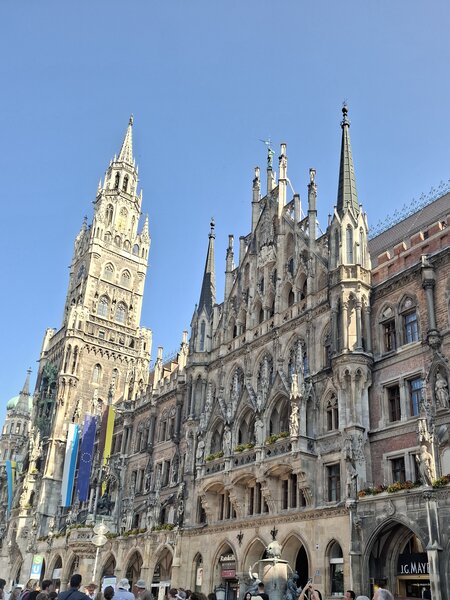
unich has preserved its original city center, which dates back to the 17th century. A stroll through this historic area allows visitors to experience the past, thanks to the restored buildings that define the city's character.
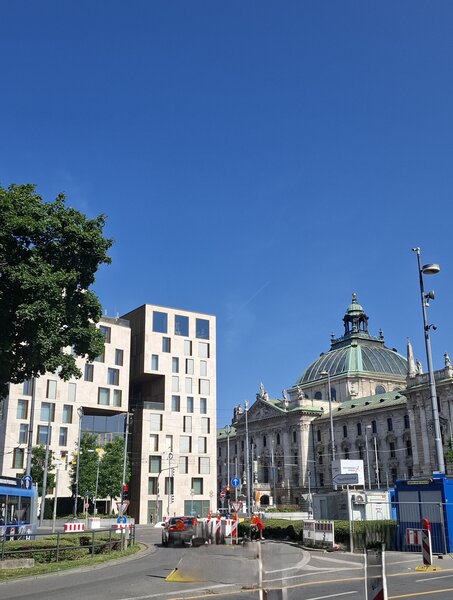
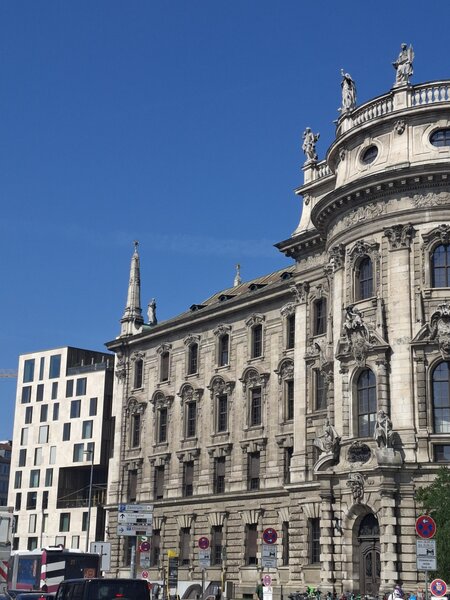
For these very reasons, jumping out of the past brings new sensations and emotions and causes tensions in the city's fabric.
Minhen Marienplatz
Munich in contrast
The gallery in the Lenbachhaus jumps out of the routine
The Städtische Galerie im Lenbachhaus is renowned for its impressive collection of "Blue Rider" art from the early 20th century. This influential artistic movement was founded by Wassily Kandinsky, Franz Marc, Paul Klee, and Gabriele Münter. For her 80th birthday, Münter donated a significant portion of the collection to the museum. You can learn more about Wassily Kandinsky's painting at this link. Kandinsky paints music for the first time in fine art
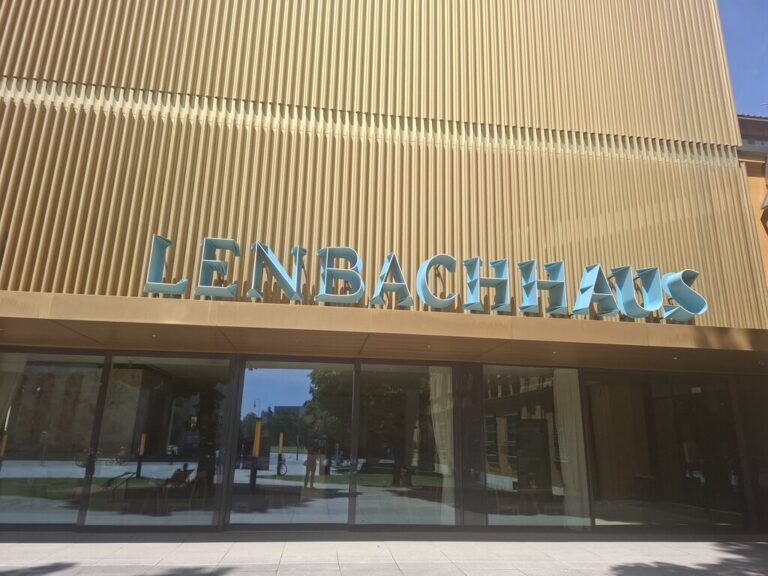
Stadtische Galerie im Lenbahhaus, Foster & Partners
"You can imagine the opposite"
The neon sign in the garden of the museum highlights the architectural expression of the Lenbachhaus Gallery, consisting of two distinct objects.
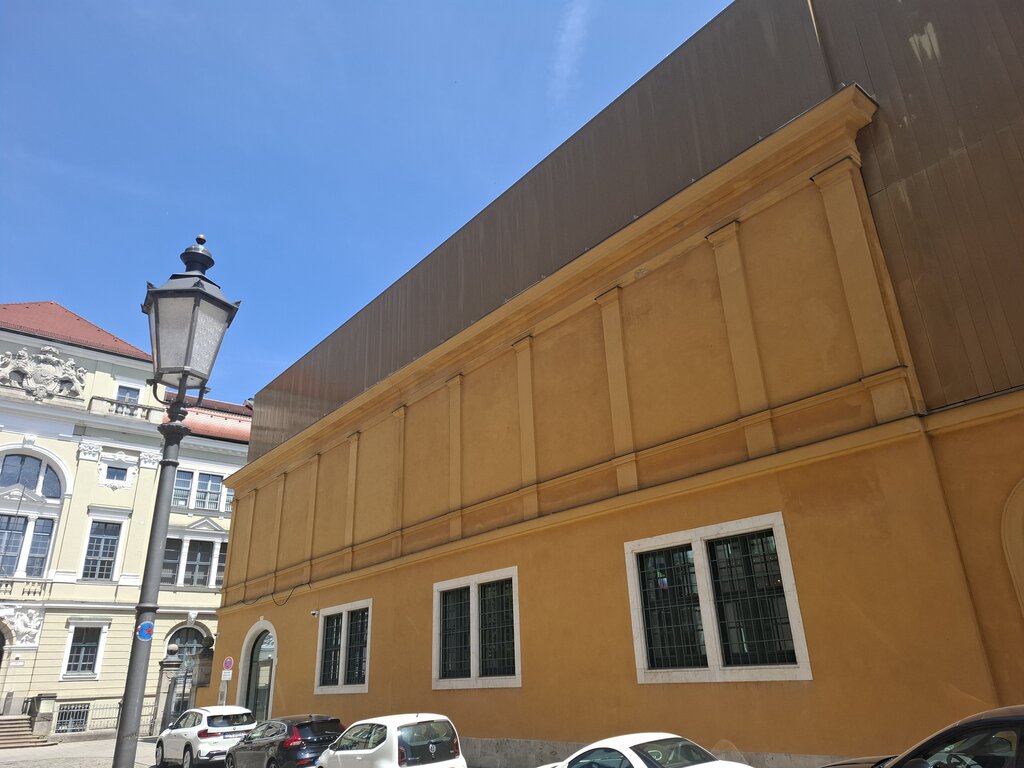
Villa Mahlerfürsten, built in 1891, was the home of the German artist Franz von Lenbach, after whom the gallery is named. The second architectural expansion, designed by the renowned firm Foster & Partners, was completed in 2013, replacing the wing that was destroyed in 1970.
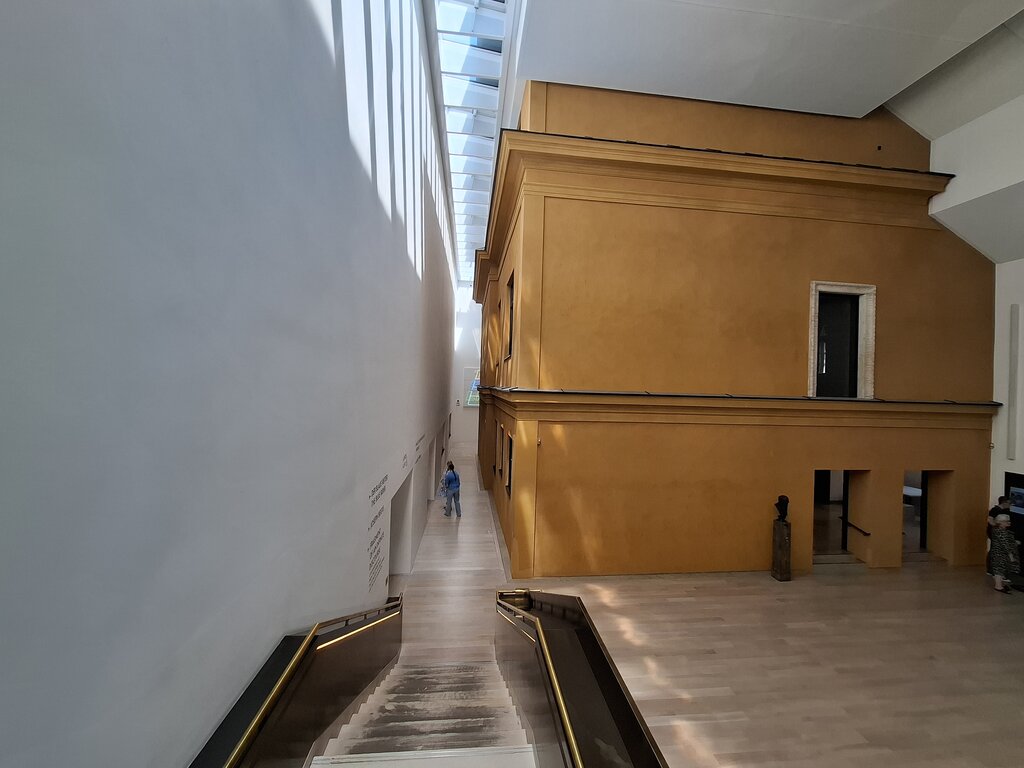
The duality of the architectural styles in this museum is evident not only in the exterior facade but also within the interior of the building. The new structure, without trying to blend in, appears to have been partially "swallowed" by the old one. As a result, one facade of the villa can be viewed within the closed atrium.
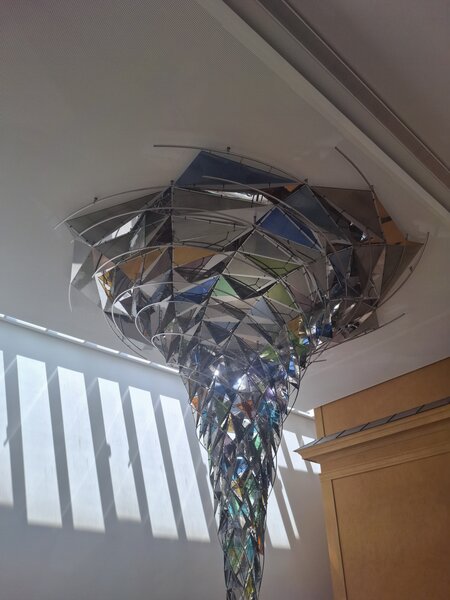
A closed piazzetta was formed precisely at the junction of the two buildings. It is embellished with a glass sculpture by one of the most famous artists today - Olafur Eliasson.
Städtische Galerie im Lenbachhaus in surroundings, Munich
Dva objekta Städtische Galerie im Lenbachhaus
Olafur Eliasson (1967)
Olafur Eliasson is associated with Iceland, Denmark, and Germany. He is based in Copenhagen and Berlin. In 2014, he formed Studio Other Spaces in Berlin with his long-time collaborator, German architect Sebastian Behmann. He previously formed the Laboratories for Spatial Research.
These two studios bring us closer to the inspirations that create his distinctive art. These are almost research projects, which include water vapor, ice, sunlight, refraction of rays, air, and water droplets. Light and color captured in glass are often implemented in contemporary architectural objects.
In Munich, Olafur Eliasson left a notable number of sculptures in public space: Sphere, Circumscription, Moonswand, Buhnenfenster on the Opera House, and Wirbelwerk in the Lenbachhaus Gallery.
Glass sculpture Wirbelwerk Ólafur Eliasson
Wirbelwerk Ólafur Elíasson glass sculpture
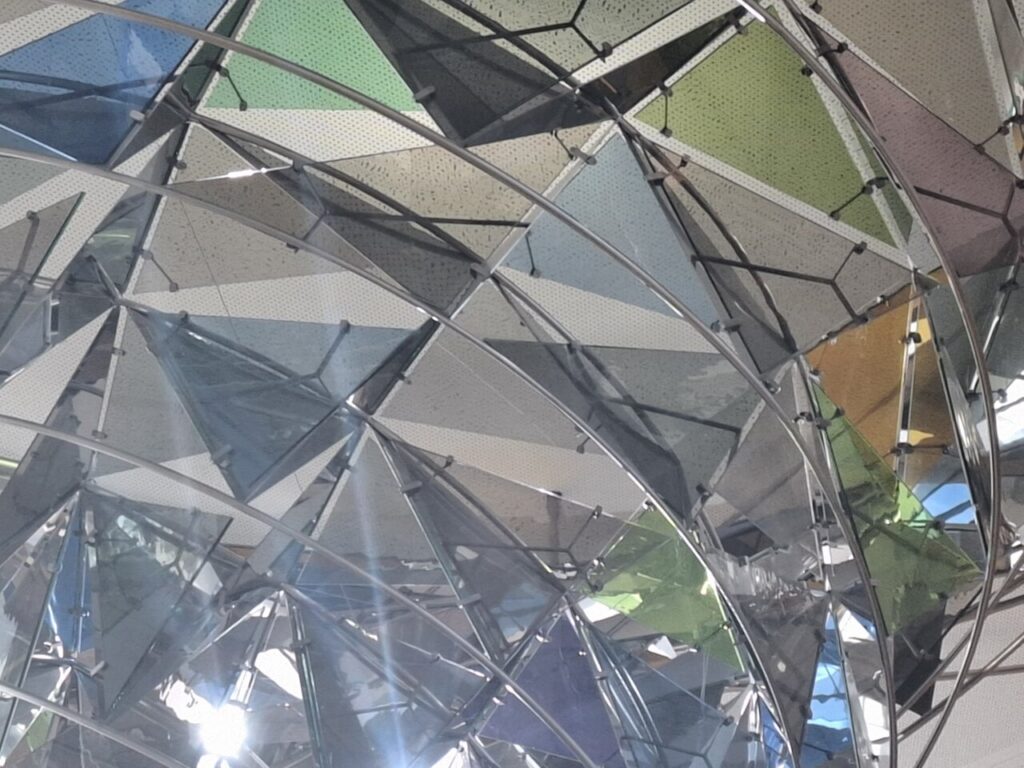
The sculpture from 2012 descends like a vortex from the ceiling of the Gallery in Lenbachhaus and reaches the visitors themselves. The glass, colorful "icicle" is made of 450 multicolored glass pieces. In combination with the light, it is reflected like a kaleidoscope on the white walls of the atrium. In this way, the entire space is animated with light from the sculpture; the architecture participates in creating an unforgettable atmosphere.
Architect by education. I am researching the theoretical foundations of the construction of modern buildings in the historic city core. Protection of historical heritage through revitalization - new life for old buildings.