Milena Pavlović Barilli portrays her duality
M

Milena Pavlović Barilli lived only 36 years (1909-1945), but, during her brief lifetime, she left an indelible mark on the Yugoslav-Serbian art scene. She was descended from the Karadjordjević royal dynasty on her mother's side, while her father, Bruno Barilli, was a violinist of Italian origin. This background contributed to her cosmopolitan outlook and allowed her to enter high social circles from the beginning of her career.

She moved between Požarevac, Germany, Spain, Italy, France and America.

She lives in Paris after completing her studies, where she is at the center of the latest events. She attends public debates on art, learns about the newest works in Hollywood cinematography, and reads the latest editions of poetry by André Breton, the founder of the Surrealism art movement. In addition, she has met the most important intellectuals who shaped artistic trends from the beginning of the 20th century. All of this provides an excellent foundation for her to explore a new artistic expression. Milena Pavlović Barilli illustrates duality in her work.

  1. 1932. She exhibited her work independently in Paris at the Jeune Europe gallery, after which she went to Rome to continue her artistic development.
Milena Pavlović Barilli is both a painter and a poet
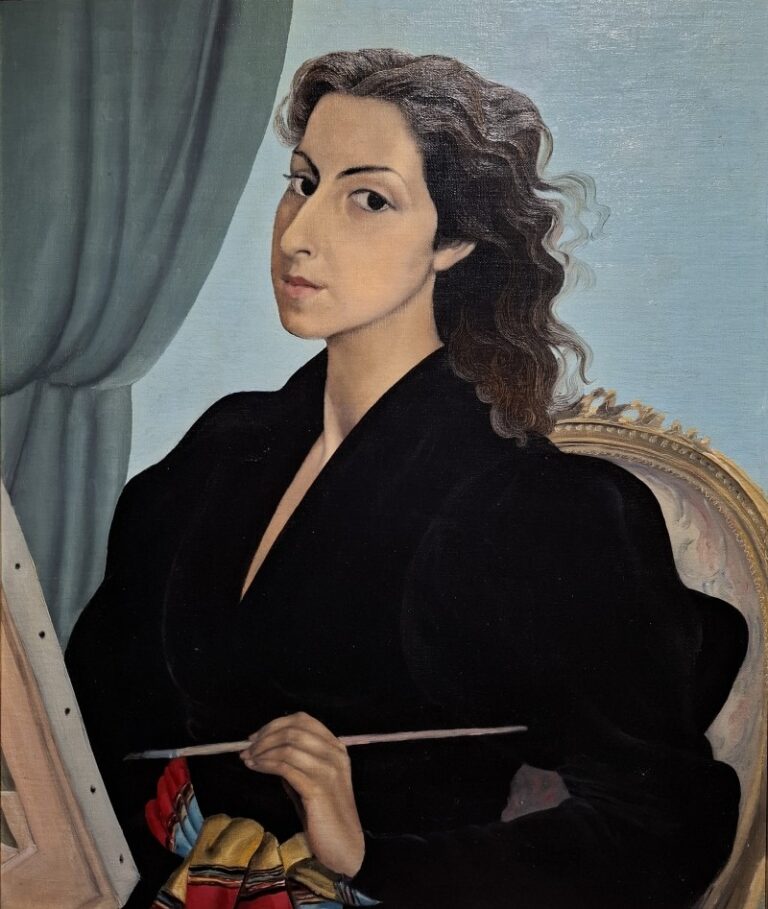
Autoportret 1938. Milena Pavlović Barilli
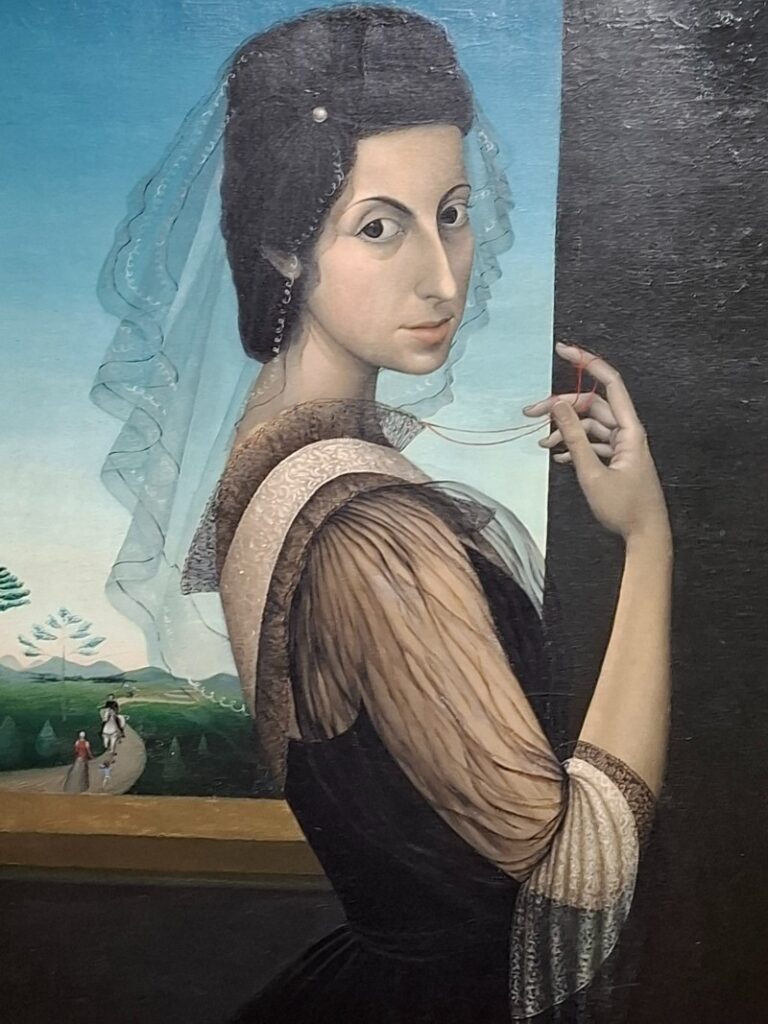
Autoportret sa velom 1939. Milena Pavlović Barilli

The paintings of Milena Pavlović Barilli do not belong to the artistic movement of surrealism as outlined in the 1924 Manifesto by its founder, the French poet André Breton. However, there is a subtle connection between her work and surrealism, particularly through her exploration of the irrational, as well as the dreams and songs she created.

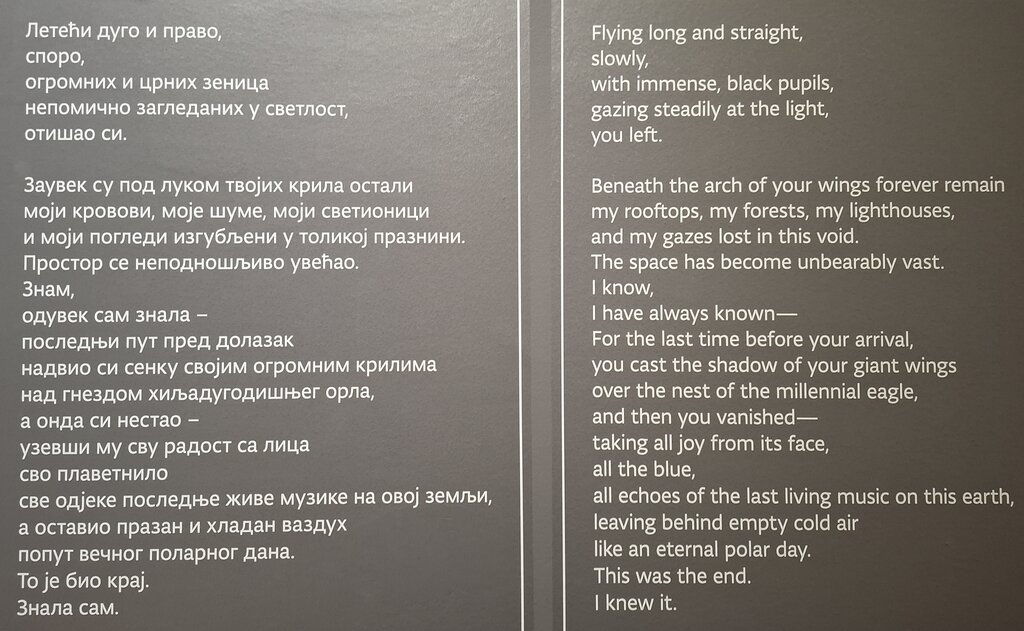
She primarily wrote in Spanish, but most of her poems have been preserved in Italian and French. Although she did not give them titles, they were indicated with Roman numerals.

The hour has come.

The passage is complete.

The moon has seen us off

with a thousand frozen tears.

Alone.

Solitary.

White.

We should remain.

We should remain.

With two nails in our pupils

so they never close again,

so we never feel tired again.

Pesma Milena Pavlović Barilli
Dualistic painting motifs

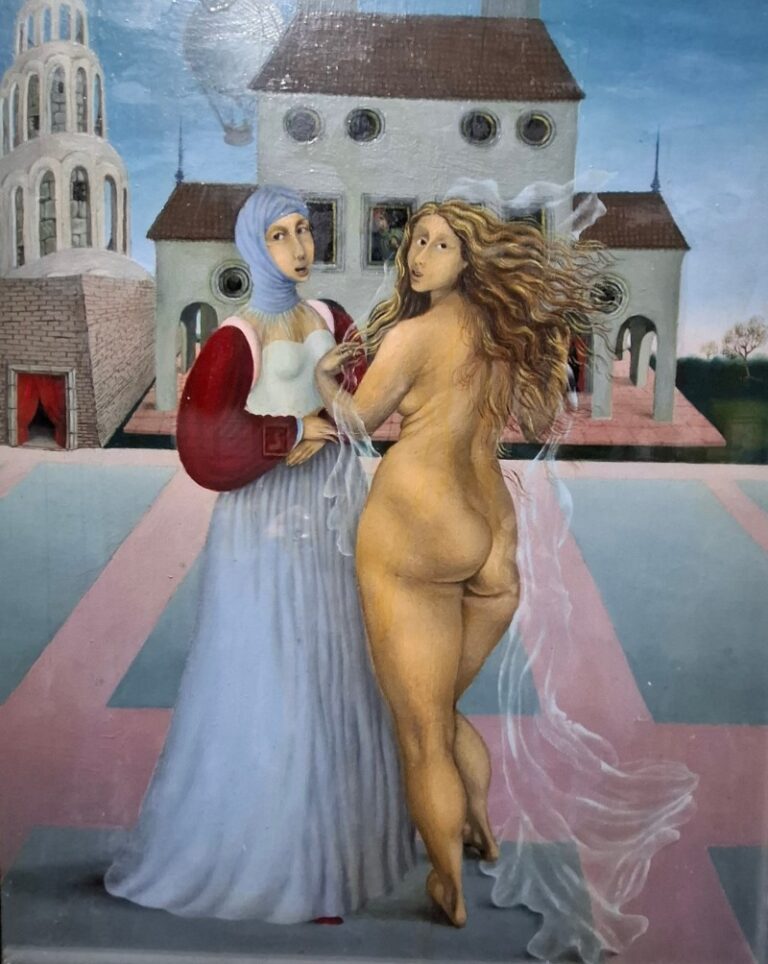
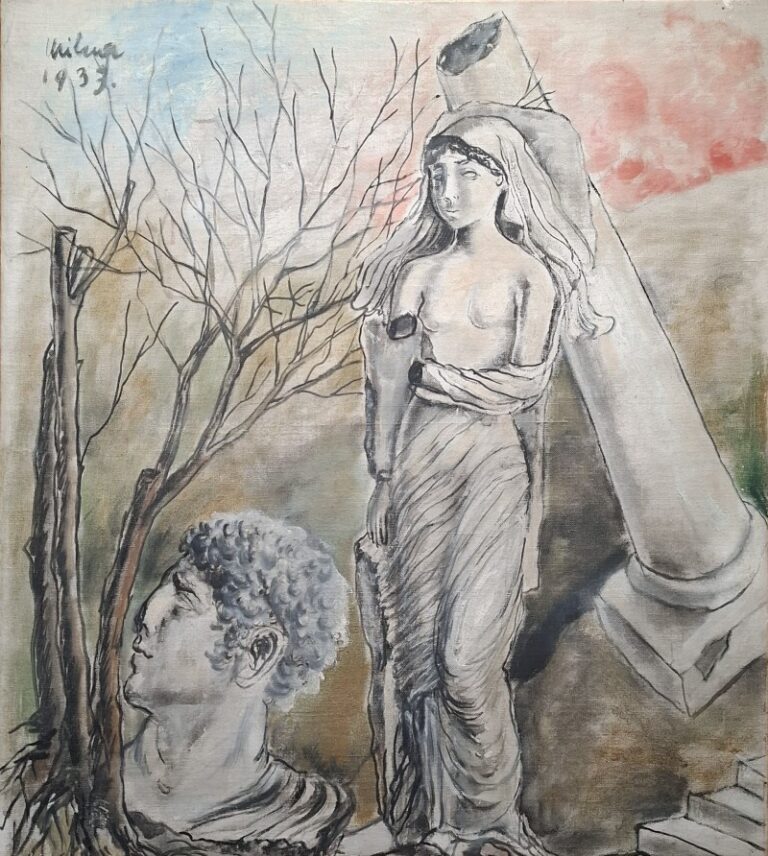
Friends of Milena's father Bruno Barilli were the famous Italian metaphysical artists Giorgio de Chirico and his brother Alberto Savinio. Their influence is very evident in her works. She adopted architectural landscapes modeled on Renaissance painting and the use of symbols in the form of ancient sculpture. Milena recorded everything in her artistic language.

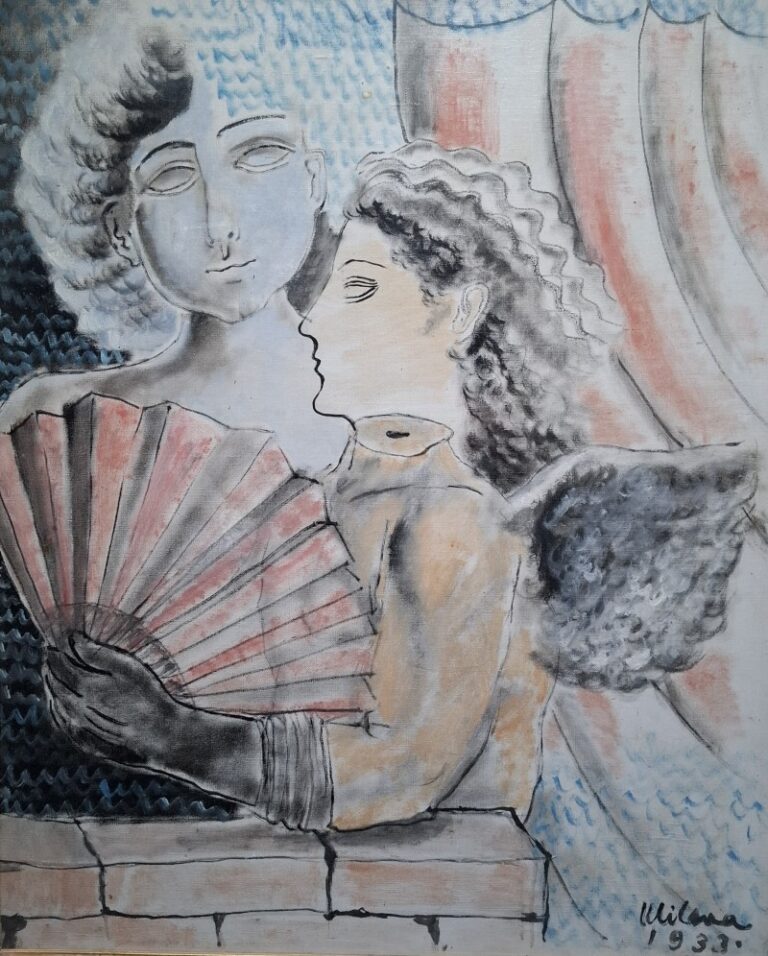
On the one hand, it uses the motif of a brick or stone wall - established by the Surrealists, and on the other, it includes the remains of ancient fluted columns modeled after de Chirico. The grooves become a hallmark of her paintings and are used unexpectedly. They are included in various subjects to which they do not normally belong.

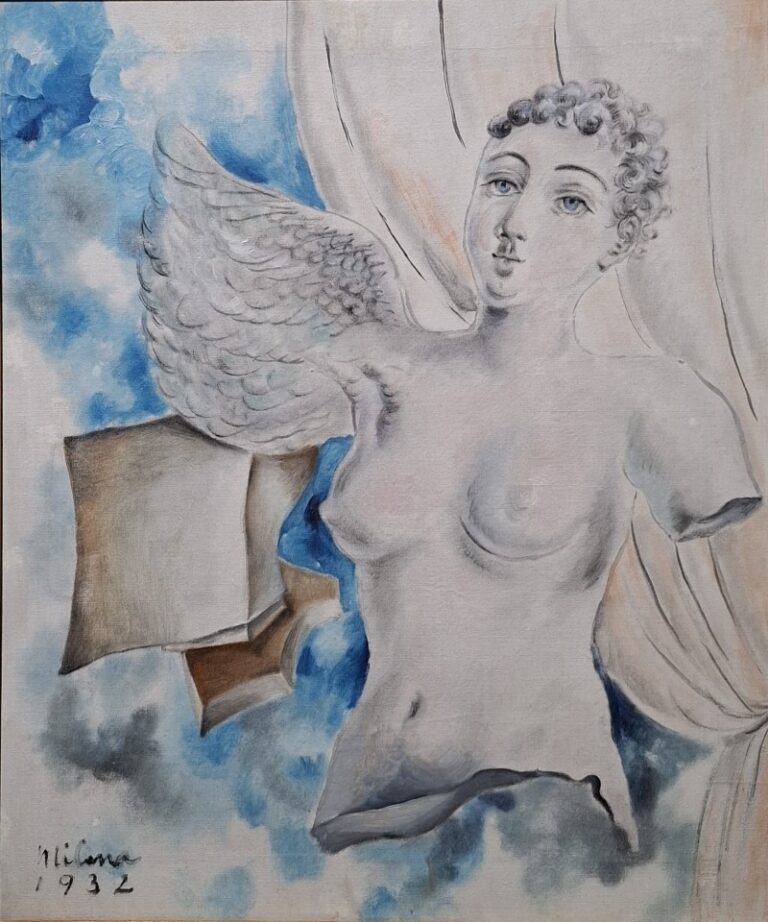
Ancient sculptures hide mythological symbols, but in the initial stages, they quietly hint at the male-female duality of Milena Pavlović Barilli's inner world.

Kompozicija 1938. Milena Pavlović Barili
Ženski krilati torzo 1933. Milena Pavlović Barilli
Enigmatska kompozicija sa ženskom figurom, stubom i drvetom 1933. Milena Pavlović Barilli
Masculine-feminine nature

Between the two world wars, there was a shift towards renouncing the collective spirit and exploring the personal, private sphere. In the sense of duality, male-female sides of personality are extremely popular new topics. Androgyny, which combines male and female influences, served to weaken patriarchal norms in society.

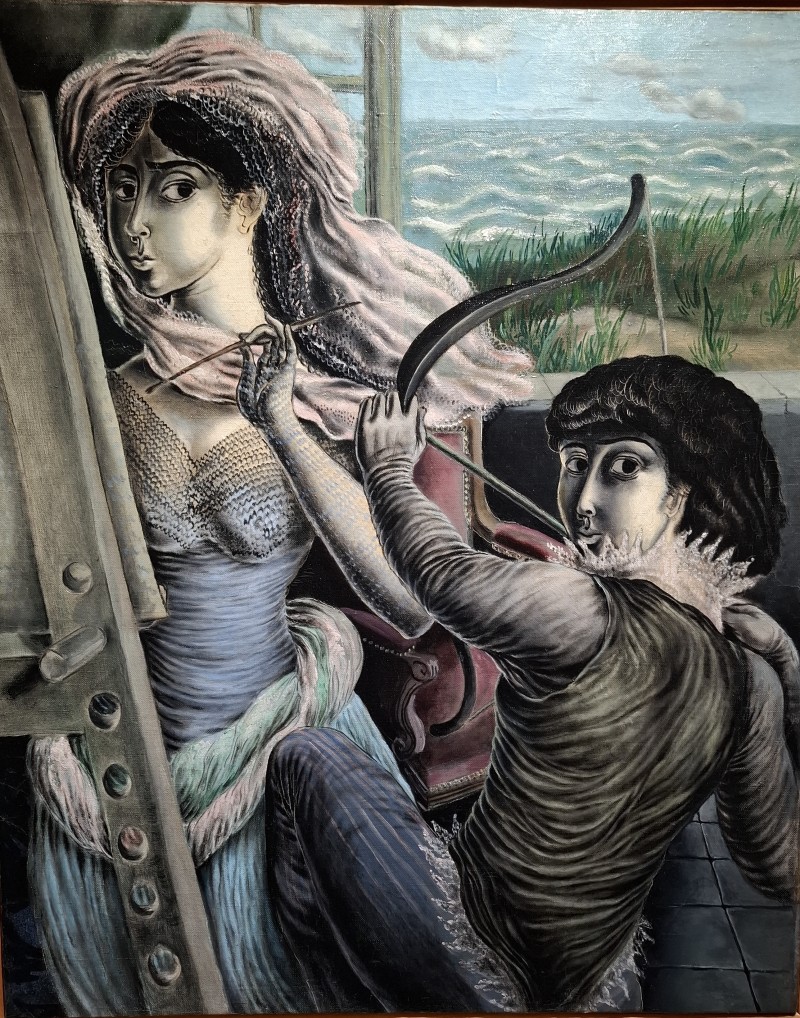
This is a dominant theme in Milena's work. The exchange of identities, the mixing of male and female physical features, sometimes through symbols, and later by mixing bodily identities - "Masculinization of female and feminization of male figures".

This was both a global issue and her exploration of her depths.

She focused all her creative energies on developing a style to present these dualities.

Devojka sa lampom 1935. Milena Pavlović Barili
Devojka sa lampom 1935. Milena Pavlović Barilli
Slikarka sa stelcem 1936. Milena Pavlović Barilli
"Wrapped in veils of dreams and fantasy in an atmosphere between reality and illusion"

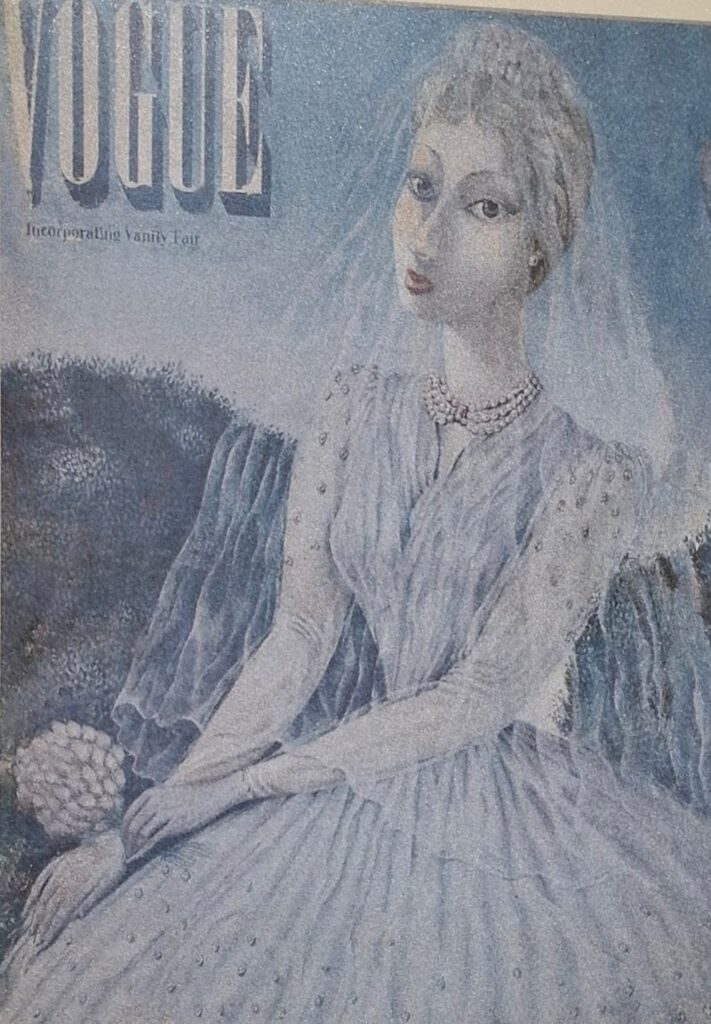
Milena probably inherited the veil motif from her parallel career. The veil is present in the pictures, reminding her of her successful career as a fashion illustrator. During her studies in Belgrade, she began working on illustrations related to applied art. In this way, she could provide the necessary means of living. She was successful in that type of painting, as evidenced by the cover of German Vogue, among other magazines.

This source of income particularly benefited her during her time in America from 1939 through the war years.

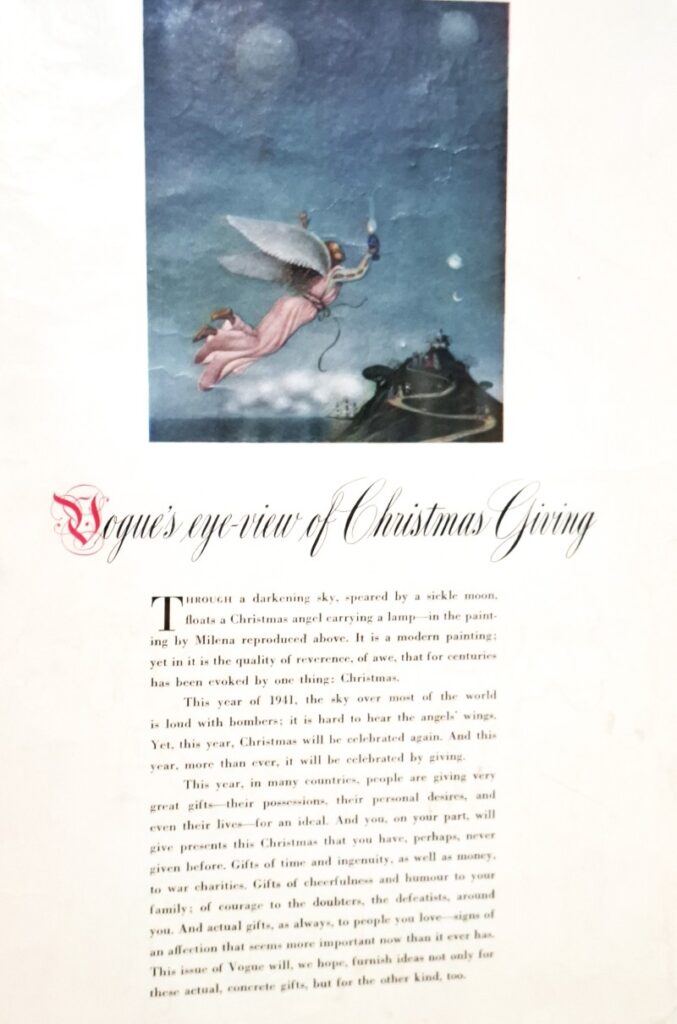
There is an interesting illustration in the American fashion magazine "Vogue" from Christmas 1941, which reflects on the beginning of World War II. This was a remarkable moment for Milena Pavlović Barilli, as it provided her the opportunity to make a lasting impression on a broader audience.

Milena Pavlović Barili Vogue Nemačka
Devojka sa velom 1936. Milena Pavlović Barilli
Novogodišnji tekst u Vogue-u
Exhibition "31 Women" at the invitation of gallerist Peggy Guggenheim
Autoportret sa Štitom i orlom 1940. Milena Pavlović Barilli
Torzo sa krilom 1932. Milena Pavlović Barilli

Her first solo exhibition took place in 1940 at the Julian Levy Gallery, where she successfully established herself on the American art scene. The second solo exhibition was organized at the United Yugoslav Relief Fund Gallery in New York and later moved to the Corcoran Gallery in Washington, D.C., where she met her future husband. Participating in group exhibitions also provided significant opportunities to present her work to a global audience. One notable group exhibition was held at the Riverside Museum in New York, titled "International Women Painters& Sculptors& Engravers."  

One of the most famous galleries in New York during World War II, "Art of the Century", was founded by Peggy Guggenheim, then married to the surrealist painter Max Ernst. With a dual character and two thematically separate units, Peggy designed it as an exhibition space for abstract and surrealist art. In addition to solo exhibitions by the most prominent artists, Peggy designed a group exhibition for female authors and invited 31 female artists from all over the world in 1943. Among them was Milena Pavlović Barilli.This speaks precisely about the acceptance of Milena's art, considering the visionary character of the great gallerist Peggy Guggenheim.

Sadly, health did not favor Milena Pavlović Barilla. Nonetheless, her distinctive legacy remains one of the most intriguing on the domestic scene.

Source:

Exhibition "Duality of Milena Pavlović Barilli"

Museum of Contemporary Art, Belgrade, Serbia

Curator of the exhibition, Mišela Blanuša

Architect by education. I am researching the theoretical foundations of the construction of modern buildings in the historic city core. Protection of historical heritage through revitalization - new life for old buildings.
TOP