Piet Mondrian captures rhythm through the use of lines and colors
Everything is expressed through mutual relations
olandski slikar Pit Mondrian slika ritam na svojim platnima. Mondrian uspostavlja svoja pravila slikajući u početnim fazama pejzaže sa fokusom na stablu drveta. Predstava drveta bila je motiv koji je koristio za geometrijske eksperimente godinama. Evoluirala je kroz razne slikarske pravce i postepeno se približavala apstrakciji. U finalnim fazama postala je potpuno nepoveziva sa ljudskom predstavom drveta. Taj proces je trajao ceo njegov radni vek a prošao je kroz 5 faza.
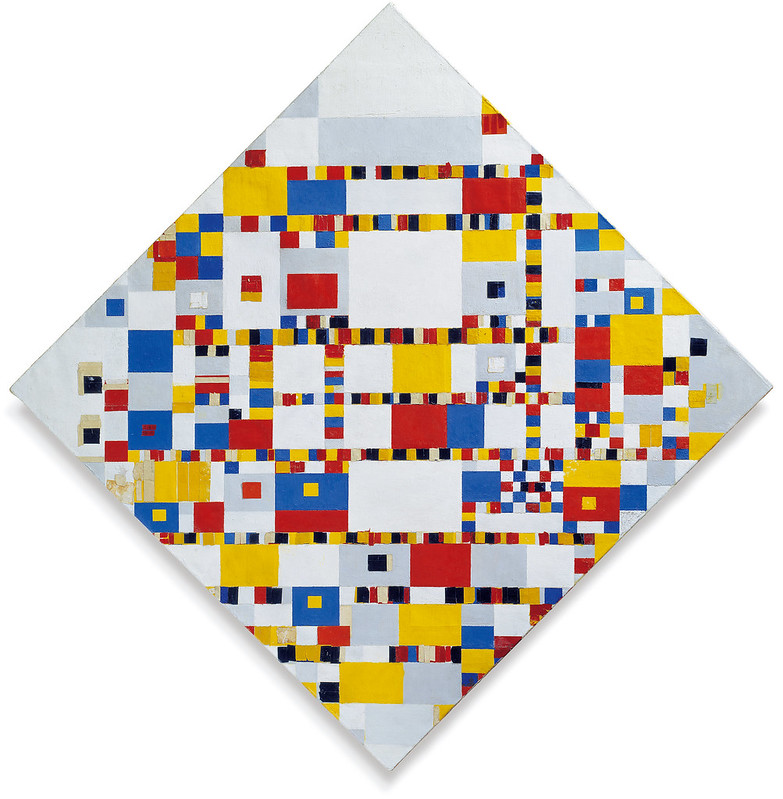
Kao i drugi slikari apstrakcije, Mondrian se oslanjao na muzičke kompozicije. Na svojim platnima Mondrian slika ritam i naziva ih imenima plesnih pravaca. Bugi-Vugi opus predstavlja najsloženiji ritam i pripada finalnoj fazi života i slikarstva.
Proces razvoja, kroz koji je prošao, podjednako je važan koliko i njegova najpoznatija faza Neoplasticizma koje se vezuje za nastanak časopisa De StijlThis magazine made a huge impact on contemporary architecture. The visual concept of neoplasticism is visible in the works of many architects and architectural movements of the 20th century.
New style- Neoplasticism
Nakon kraćeg boravka u Parizu, gde se upoznaje sa slikarstvom Pikasa i Braka, vraća se u Holandiju i formira, zajedno sa Teo Van Duzburhom (Theo Van Doesburg), časopis De Stajl. Tu su dali prostor slikarima, vajarima, pesnicima i arhitektama koji su sanjali o sintezi umetnosti i života.
The painting style that arose then is called Neoplasticism, it is based on straight lines and primary, basic colors.
Mondrian is looking for an answer to whether it is possible to use color as self-sufficient without the need to represent something. While other painters from the beginning of the 20th century tried to make a connection between color and emotion, Mondrian went one step further. He renounces emotions in his painting. He turns to painting the establishment of tension.
Želeo je da napravi sliku koju bi ljudi iz bilo koje kulture na zemlji mogli da razumeju univerzalno– čistu sliku koja bi imala smisla kako za australijskog tako i za Evropskog starosedeoca .
Hegel's definition of contrast
Univerzum je kontrolisan tenzijom i kontradikcijom. Svaki predmet je definisan sopstvenim kontrastom….. Kontrast je izvor neprekidne vibracije i energije. Hegel
This Hegelian idea does a great job of clarifying the term juxtaposition– a term that will find enormous value in contemporary architecture. The combination of opposite styles contributes to a clearer perception of each style individually. This approach excludes competition between the two parts, based on comparing common elements. The contrast establishes a communication that cannot truly compromise the value of any component. Another interpretation of the juxtaposition is bordering (with a neighboring object). Insurmountable boundaries were established between the two elements. Each one is a whole for itself, there is no permeation and fusion between them.
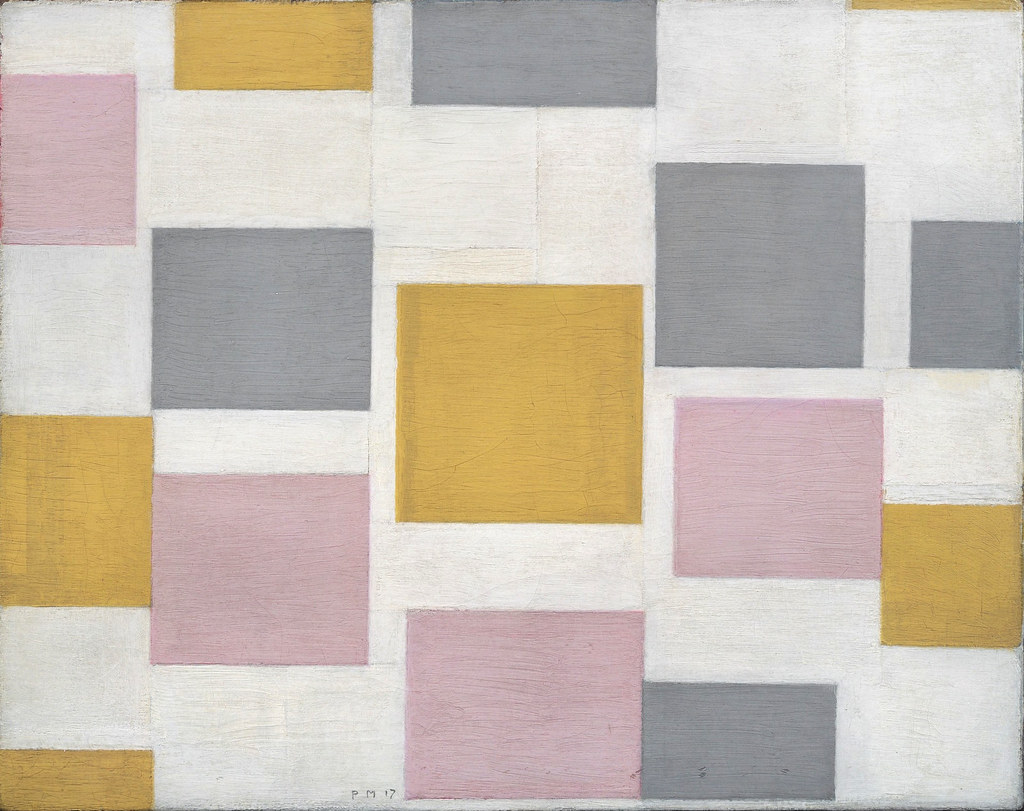
Kroz sliku Kompozicija sa pravougaonicima u boji 5, moguće je sagledati uticaj filosofije Hegela na Mondriana koju je mešao sa teosofijom. Pravougaonici u kontrasnim bojama omogućavaju da se svaka boja bolje sagleda i definiše. Nepravilnost podele, slobodno postavljeni pravougaonici početak su rada na novom ritmu.
Rhythm of music
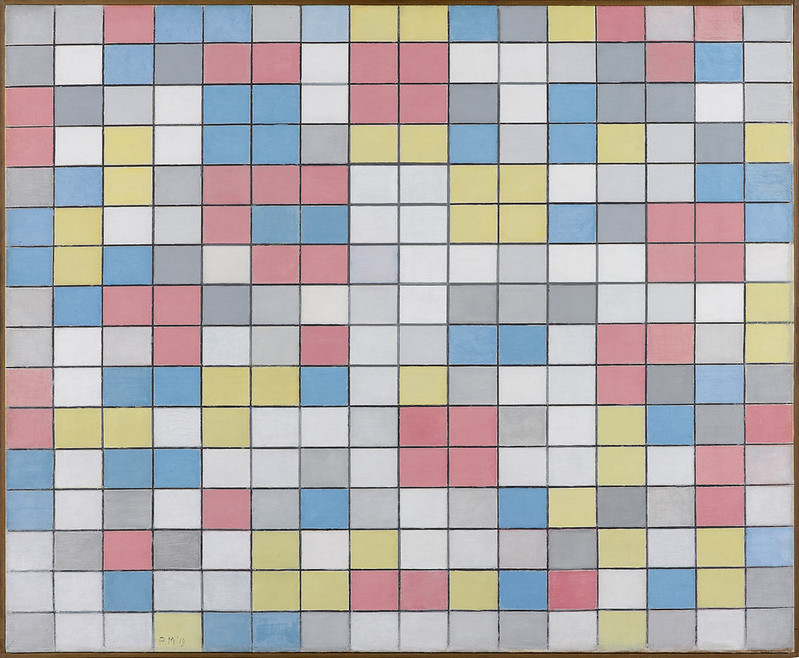
In the painting Chessboard, the artist uses a regular geometric pattern as the basis for his rhythmic composition. Piet Mondrian paints rhythm using color grouping. Alongside his experiments with the geometric division of shapes, he also explored color in a similar manner.
Ova umetnost nije zavisila od iluzija poput dubine i perspektive, ravna je i direktna.
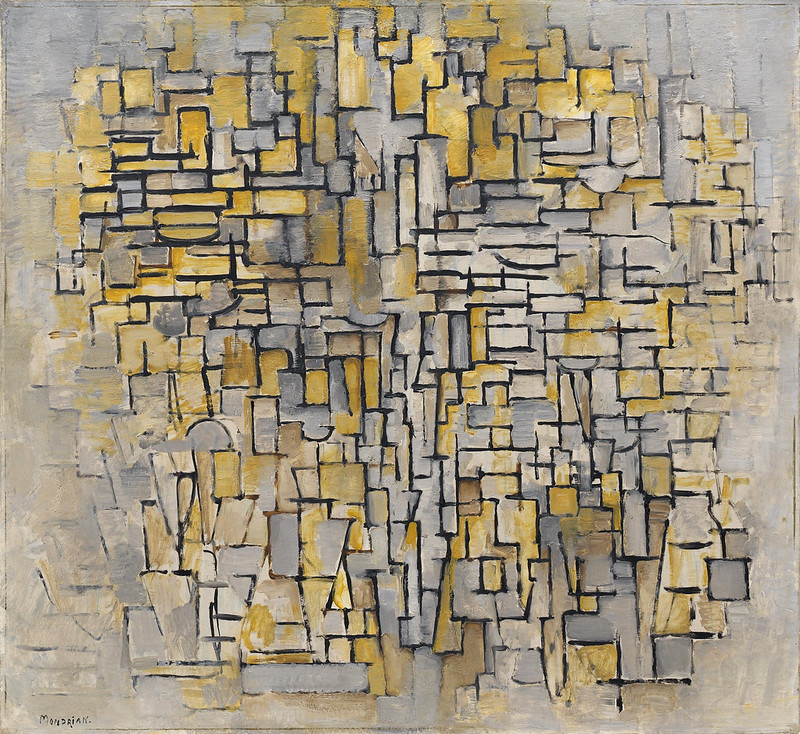
Following the Chessboard picture, where the correct pattern was applied, a different division is decided. The irregular division, which dominates his paintings from the Neoplasticism phase, belongs to the syncopated rhythm characteristic of jazz.
U cilju stvaranja univerzalne slike, Mondrian je odlučio da vizuelnu umetnost treba pojednostavit do njene suštine, a suština je linija i boja. Odnosi ovih jednostavnih elemenata stvaraju ritam.
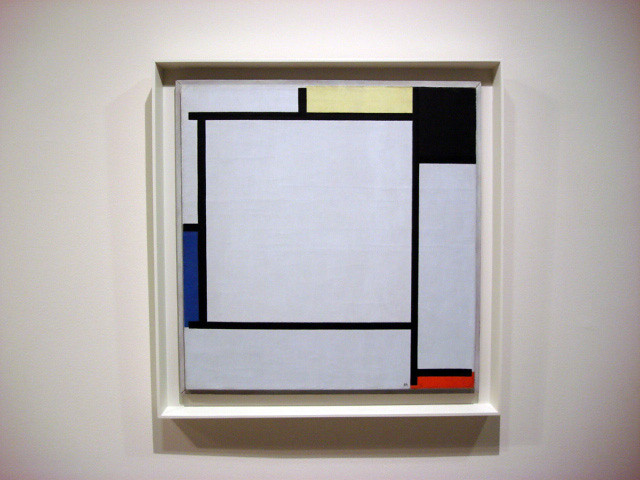
Colored planes, both in position and dimension, and in the value given to color, plastically express only relationships, not forms.
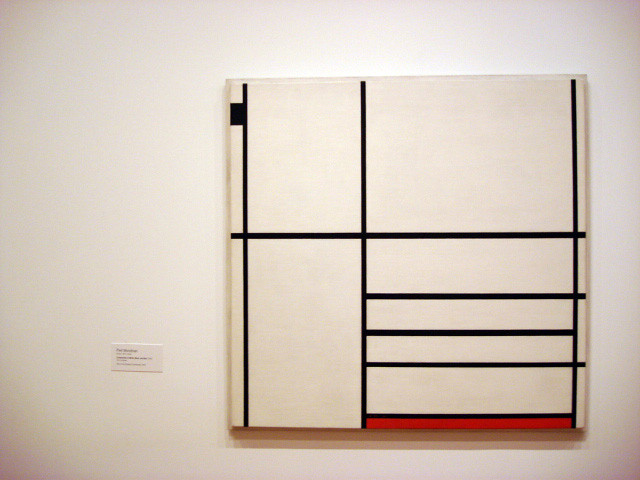
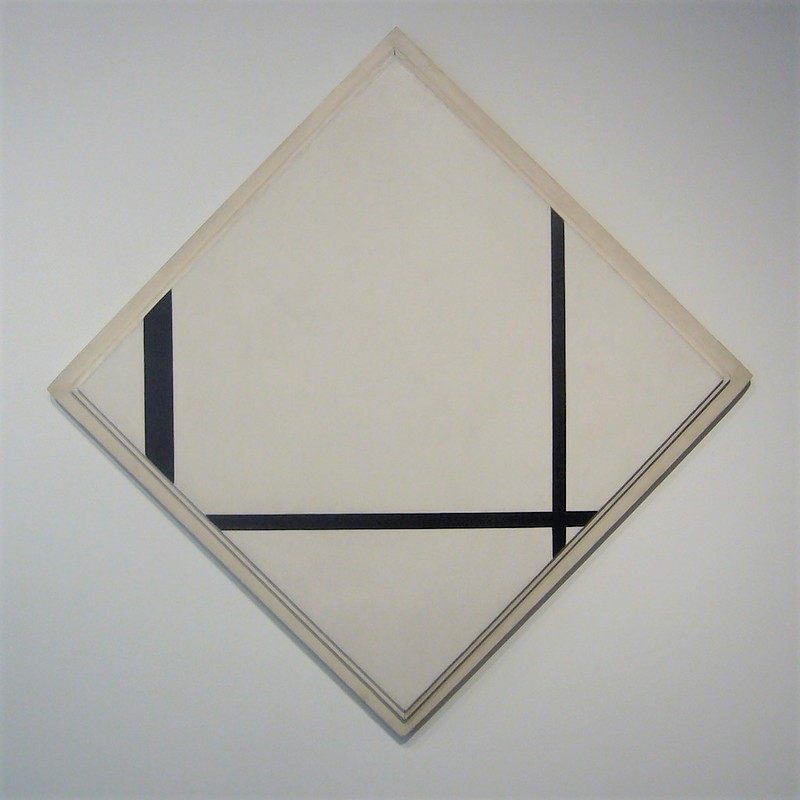
“Piet Mondrian: Composition in White, Black and Red (MoMA – New York)” by scalleja is licensed under CC BY-SA 2.0.
Strastveno posvećen plesu i ritmu, Mondriana su oduvek privlačile najnovije tendencije u plesnoj muzici. Krajem 1920-ih nazvao je dve slike Fox Trot A i B po popularnom američkom plesu, nedavno uvedenom u Evropi. Nove umetničko- plesne forme prepune su džeza. Na ovim slikama vizuelni ritam je postizao suprotsavljanjem pročišćenih likovnih sredstava. Piet Mondrian paints rhythm ratio of thin and full lines, surfaces, and position of the canvas. Dynamics and movement are established in a few simple steps.
“Piet Mondrian – Fox Trot A” by Kent Wang is licensed under CC BY-SA 2.0.
Syncope in music
In the Boogie-Woogie series, small squares of red, blue, and gray, along with moving lines, were added to the basic composition. This addition gives the whole piece a new pace. staccato ritam. Muzika Bugi-Vugi, sa neočekivanim ritmom, zvanim sinkopa, vizuelno je razrađena na slici.
Syncope in music, it expresses mental restlessness, due to the disturbed normal arrangement of accents in the beat.
The analysis concluded that there was a systematic approach to the mathematical division of the canvas. This division represented different sections of the musical notes. When the new staccato tempo emerged, it was depicted in small forms, similar to eighth and sixteenth notes. In this manner, Mondrian captured the rhythm of music in his paintings.
However, the daily pulsating rhythm of New York and Broadway exerted the greatest influence on his last paintings.
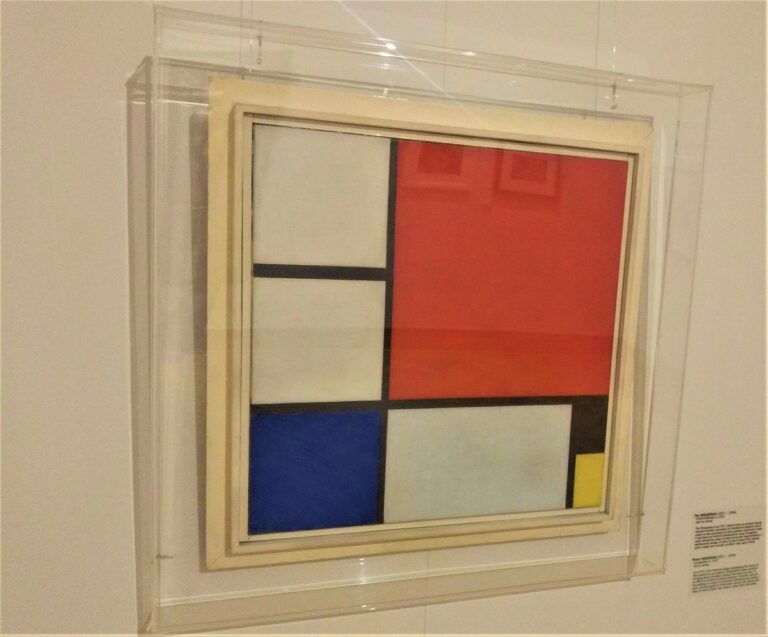
Na fotografiji je predstavljena Mondrianova slika pod nazivom Kompozicija II. This painting is part of the permanent exhibition Narodnog muzeja u Beogradu, Srbija.

Pingback: Kandinski slika muziku po prvi put u likovnoj umetnosti ⋆ ARXXITEKTURA